Nota: En enero de 2016 escribí un blogpost para The Oxford Character Project en el cual reflexioné sobre las lecciones de la forma de liderazgo del Papa Francisco. He decidido desempolvarlas porque creo que siguen siendo vigentes.
Three lessons of good leadership from Pope Francis
By Juan D. Gutiérrez, January 2016
«I’m going to be a Jesuit, because I’m going to want to go out to the neighbourhoods, to the villas, to be with the people”, told Jorge Mario Bergoglio to his secondary school friends. He surprised his schoolmates and family with his future plans. Not only was he not going to be a chemist, as most expected, but he also wanted to become a Catholic priest, working in the shantytowns of Buenos Aires. Who could imagine that six decades later, in March 2013, this teenager would become the first Latin American Pope? The man now known as Pope Francis is the religious leader of millions of Catholics and a very influential figure worldwide. According to Austen Ivereigh, one of his biographers and an alumnus of St. Antony’s College, Oxford, the Pope “has become the most popular figure of the age, a global icon”.
This text aims to present three key insights from the Pope’s life that I believe make him a positive example of leadership. I thought about writing this post in early December 2015, after the first dinner of the Global Leadership Initiative programme. During the dinner Michael Lamb commented how reading biographies could be a very good way of learning about leadership. Pope Francis is one of the global leaders that attracts me the most and I decided to read the biography written by Ivereigh, titled “The Great Reformer: Francis and the Making of a Radical Pope”. Ivereigh’s biography is rooted in his DPhil research at Oxford University, which focused on politics and religion in Argentina, and further fieldwork he conducted after the Pope’s election.
Ivereigh’s account of Jorge Mario Bergoglio’s life shows several traits that you would expect to find in any effective leader: pursuing a clear mission, hard working, teaching through example, being bold and innovative, remaining authentic, and inspiring others. But, since I am not interested in merely any kind of leadership, this post aims to distil the characteristics that make him a good leader.
1. Authentic power is service
Six decades after Jorge Mario’s mission statement, it is safe to say that he fulfilled the vow he made as a teenager: to serve others with a preference for the poor. His work as a Jesuit priest, then as a Bishop and afterwards as Cardinal in Buenos Aires was effectively devoted to helping the inhabitants of the villas. Bergoglio had a clear objective from the beginning: to serve the weakest through his pastoral work. For example, in the beginning of the 1980s as the rector of the Colegio Máximo, the most important college for Jesuit formation in Argentina, he turned 25 acres of the college into a farm that fed four hundred children a day. The Argentinian economic crisis in the early days of the transition from dictatorship to democracy was especially harsh for the working class neighbourhoods that surrounded the college. The farm was not only a means to mitigate these hardships, but also an instrument for priestly formation of the middle-class students that attended the college. Some students disliked the murky job, but as one of them told Ivereigh, they could not complain because Bergoglio “would put his boots on like the rest of us to get down in with the hogs.”
As Bergolgio reached higher ranks in the Jesuit religious order and in the Catholic Church, he did not forego his option for the poor. He embraced a notion of power as service and rejected the luxuries that often come with it. There are abundant anecdotes of how he has rejected the perks that came with these new posts: drivers, expensive cars, lavish accommodation, pricy clothes, etc. Not only did these comforts symbolize the opposite kind of power than that which he pursued, he also knew that these privileges would have made him inaccessible. His desire to be a man for others required direct contact with the people. In this vein, as a Pope, he has repeatedly requested that priests go out of their churches and reach the weakest.
In sum, the first lesson on good leadership from Pope Francis is to understand that authentic power means service of others, particularly of those who need more help.
2. Embracing diversity and finding common grounds
Pope Francis is a religious leader that has aimed to reach disenchanted Catholics, people that profess other religions, and also non-believers. This is not new; during his life he has had key relationships and friendships outside his Catholic milieu, including unlikely acquaintances such as Marxists.
Bergoglio has worked with people outside of the Catholic frontiers to pursue common purposes. For example, one of the most important pursuits of Jorge Mario Bergoglio in the last two decades has been inter-religious dialogue. As a cardinal in Buenos Aires he worked closely with leaders from Muslim, Jewish, and Anglican evangelical communities. According to Omar Abboud, the director of the Islamic Centre of the Argentine Republic, “Bergoglio was the one who showed us and taught us about dialogue… He brought minorities to the table, to create unprecedented civic space.” In more recent times, as a Pope, he has continued to find common ground with other religions through symbolic gestures and messages, such as washing and kissing the feet of Muslim men and women in the Maundy Thursday rite, and reminding Catholics, through a video recently released, that regardless of the religious faith that people profess, all of them are children of God.
Hence, the second lesson on good leadership from Pope Francis is to embrace diversity, to be sensitive towards those who think different and to strive to find common grounds to pursue solidarity collectively.
3. Important things take time, collaboration, and humility
In 1973, when Jorge Mario Bergoglio was only 34 years old, he was appointed provincial superior of the Jesuits in Argentina and in 1980 he was named rector of the Colegio Máximo. Until the mid 1980s his ascent in this Catholic religious order was continuous. However in the mid1980s, when he was 50 years old, he had a major drawback when he was removed as rector of the Colegio Máximo by the new superior-general of the Jesuits. Tensions among Argentinian Jesuit leaders about the way Bergoglio understood the identity and mission of Jesuits had led some factions of this religious order to lobby for his retirement. Due to his ascendancy over young Jesuits, he was not only removed from his position but he was asked to leave the country to start a doctorate in Germany. Ivereigh’s findings show that this period of time was particularly difficult for Bergoglio. A man of action, and used to work with people, was suddenly far from what he thought was his mission and was not comfortable working in silent libraries.
Life gave Jorge Mario Bergoglio new opportunities afterwards and he was appointed Bishop in 1992 and Cardinal in 2001. But the prior difficult experience was very important to progress later one. He learned from desolation important lessons about humility and the need to learn from his previous mistakes. He came to understand the importance of struggling to forge agreements and consensus to ensure unity. In the past he had been portrayed as authoritative, but after enduring difficult times his main strength was to exert a deliberative power. A leadership that listened more, that took decisions after collegiate discussion and that promoted bottom-up processes. This quality may have been one of the features taken into account by the Cardinals that elected him as Pope.
Therefore, the third lesson on good leadership from Pope Francis is that important things take time, humility to derive lessons from others, and the often-slow processes of cooperation.
Besides the three specific lessons explained above, I learnt from Ivereigh’s biography of Pope Francis that building the qualities of good leadership often requires long-term commitment and comes as the fruit of experience and enduring processes. Jorge Mario Bergoglio had a very clear idea of what he wanted to pursue in life when he was a teenager, but he only became a good leader decades later, after learning from others and from his own mistakes.
No leader is perfect. In fact not all leaders are good leaders. But there are certainly millions of good leaders out there that may teach us a lesson – or three in the case of Pope Francis. If you are interested on learning about good leadership I encourage you, as Michael Lamb and Edward Brooks did with me, to choose a local, national or global leader, and find out through their biography how they came to be a positive leader.







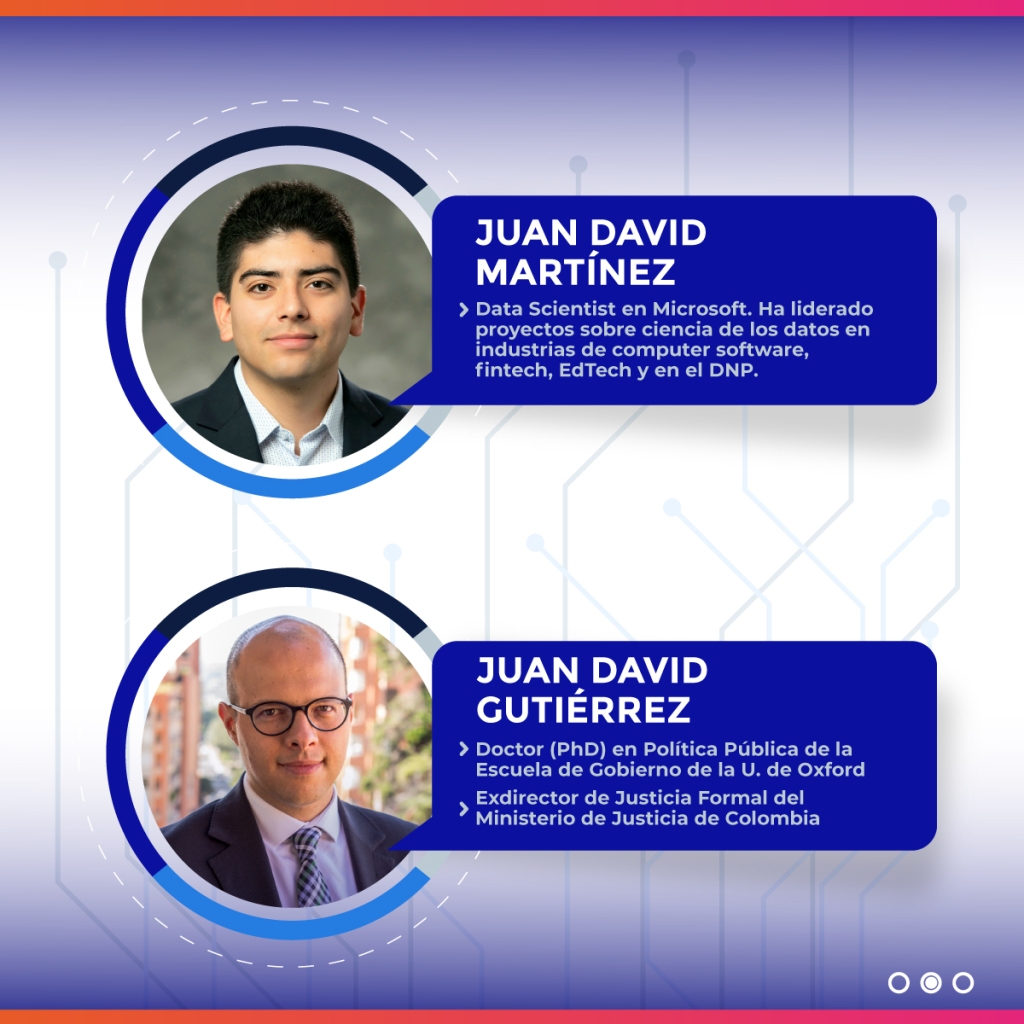



 Juan David Gutiérrez